
Cookout Allergen Menu 2026 – Full Guide to Allergens, Gluten-Free Options & Safe Ordering
If you live with food allergies, eating at a fast-food restaurant can feel overwhelming. Long menus, hidden ingredients, shared kitchens, and unclear labels make every order stressful. At places like Cookout, the menu is full of burgers, sides, and milkshakes, but cookout allergen details in the menu are not always easy to see. For someone avoiding gluten, dairy, nuts, or certain oils, one small mistake can lead to serious health problems. This fear is real, especially for parents ordering for a child or for anyone with strong food sensitivities.
I have worked closely with menu research and allergen-focused food content, studying how large fast-food menus are built and where risks usually appear. Over time, I’ve analyzed how ingredients, cooking oils, shared fryers, sauces, and desserts affect people who need gluten-free, dairy-free, or plant-based choices. I’ve also compared how different fast-food chains handle allergen information and kitchen practices. This guide was created from that experience to clearly explain how Cookout’s menu works from an allergen point of view, where the highest-risk areas are, and how to approach ordering more safely instead of guessing.
Cookout Allergen Quick Takeaways
Important Note About Cookout Allergen Information
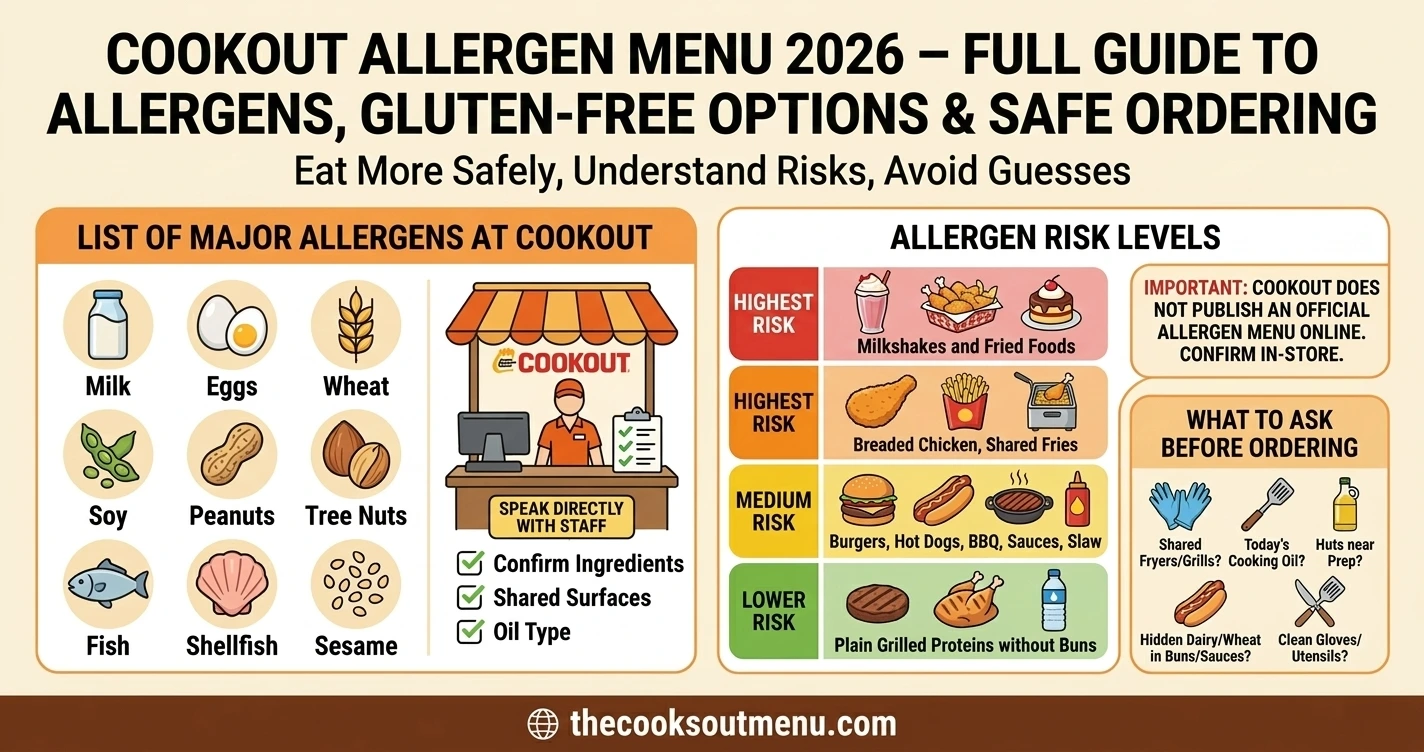
Cookout does not provide a single official allergen menu on its main website. Allergen details usually come from nutrition guides, supplier information, and in-store ingredient binders. Because ingredients and kitchen practices can vary by location, direct confirmation is always necessary.
Cookout does not publish an official allergen menu PDF publicly. This guide is for education only. Anyone with food allergies should always speak directly with Cookout staff before ordering and never rely only on online information.
What Is the Cookout Allergen Menu?
Cookout allergen menu describes the general allergen guidance rather than a fixed document. You can check identified allergens that appear across Cookout’s menu and understand how the restaurant’s kitchen setup affects food safety.
Cookout restaurants prepare burgers, chicken, sides, and milkshakes using shared grills, fryers, prep counters, topping stations, and blenders. Because of this setup, foods can come into contact with allergens even when those allergens are not listed as main ingredients.
Complete List of Major Allergens at Cookout
Cookout’s menu contains a wide range of ingredients used in buns, sauces, desserts, and cooked foods. Many of these ingredients fall under major food allergen categories recognized in the United States.
Menu items may contain or come in contact with:
Hidden allergens are often present in buns, sauces, slaw, marinades, seasoning blends, cheese products, and dessert ingredients. Sauces and toppings are especially important to verify because they often contain egg, soy, dairy, or wheat.
Cookout Allergen Risk Levels
Not all Cookout menu items present the same level of allergen exposure. Items prepared in shared fryers or blenders generally carry higher risk than foods cooked with fewer ingredients or sealed packaging.
Lower risk does not mean allergy-safe. Always confirm from cookouts stores about the ingredients they use and the allergens they may contain.
How Cookout Kitchens Handle Food and Why It Matters for Allergies
Cookout kitchens are designed for speed and volume. Multiple foods are cooked at the same time using shared grills, fryers, prep counters, and topping stations. Burgers, chicken, hot dogs, and sides often move through the same work areas. This system allows fast service, but it also increases the chance that ingredients can touch surfaces that previously handled other foods.
In many Cookout locations, buns, proteins, toppings, and sauces are assembled close together. Gloves, utensils, and prep tools may be used across different orders during busy periods. Fryers are commonly used for multiple products, including breaded items. Blenders are reused for many milkshake flavors. These practices make it difficult to fully isolate allergens such as dairy, wheat, soy, peanuts, and eggs.
Understanding how food moves through a kitchen is just as important as knowing the ingredient list. Even when an item does not contain a specific allergen, it may still come into contact with allergens through shared oil, grill surfaces, or preparation tools. This is why people with food allergies are often advised to keep orders simple, ask about preparation steps, and avoid high-risk menu categories. Kitchen design and workflow play a major role in allergen exposure.
Gluten-Free at Cookout
Cookout kitchens are not gluten-free environments. While some foods may not include wheat ingredients, shared cooking surfaces and fryers increase the chance of gluten exposure.
People choosing gluten-free often focus on removing buns or breads. However, cross-contact from grills, prep counters, and fryers can still introduce gluten into foods that are otherwise wheat-free.
Lower-risk bases:
Higher-risk foods:
Anyone with celiac disease should use extreme caution and discuss preparation methods carefully before ordering.
Are Cookout Fries Gluten-Free?
French fries are one of the most commonly questioned items at fast-food restaurants. At Cookout, fries are prepared in shared fryers, which significantly increases the risk of gluten cross-contact.
Because of this, Cookout fries are not considered safe for strict gluten-free diets or celiac disease, even if the potatoes themselves do not contain wheat. Gluten can transfer through fryer oil, baskets, and nearby prep stations.
Oils & Peanut Allergy Concerns
Cooking oils and kitchen handling practices play a major role in allergen safety. Even when peanut oil is not directly listed as an ingredient, shared oil systems and supplier blends can still create nut exposure risks.
Most Cookout locations use vegetable-based cooking oils such as soybean or canola blends. However, oil types can change by supplier and location.
Nut-related risks include:
Anyone with peanut or tree-nut allergies should always ask what oil is used and whether nuts are handled in the kitchen.
Vegan & Dairy-Free Options at Cookout
Cookout’s menu is centered around meat and dairy-based foods, but some items can be modified to avoid allergens. Removing cheese, buns, or sauces can reduce certain allergens, but shared equipment still have the risk.
Possible dairy-free or plant-leaning builds:
Hidden dairy commonly appears in cheese, sauces, salads, chili, desserts, and milkshake bases. Butter-flavored oils and seasoning blends may also contain milk derivatives.
Cross-contact with meat and dairy equipment is likely across most of the cookout kitchens.
Ingredients in Cookout Milkshakes
Milkshakes combine dairy bases, flavor syrups, candy pieces, cookies, and nuts. The use of shared blenders to make milkshakes makone of the highest-risk categories for allergen exposure.
Milkshakes are prepared with:
Milkshake Component | Why It’s Risky |
|---|---|
Dairy base | Major source of milk allergens |
Cookie & candy mix-ins | Often contain wheat, eggs, and soy |
Nut flavors | Peanut and tree-nut exposure |
Chocolate blends | Often contain soy and dairy |
Shared blenders | Very high cross-contact risk |
Milkshakes are among the highest-risk items on the menu for anyone with food allergies. Hence, you should avoid milkshakes and drink something alternative which is gluten and allergen free.
Cookout vs In-N-Out Allergen Approach
Fast-food chains differ widely in menu size, ingredient handling, and allergen transparency. Restaurants with smaller menus often have fewer exposure points than restaurants with highly customizable systems.
In-N-Out operates a limited menu with clearer allergen guidance. Cookout offers a much larger menu with wide topping choices, tray combinations, and dessert varieties. This variety increases the number of ingredients and shared preparation steps.
More ingredients and more shared stations increase the allergen complexity.
Common Lower-Risk Bases
Simpler foods with fewer ingredients are often easier to evaluate for allergen risk. Plain grilled proteins and sealed drinks are commonly used starting points when navigating shared kitchens.
Common lower-risk bases include:
These items still require ingredient and preparation confirmation, but they generally involve fewer sauces, toppings, and processing steps.
What to Ask at Cookout Before Ordering
Clear communication with restaurant staff is essential for people with food allergies. Asking about ingredients, preparation surfaces, and oil use helps identify potential risks before ordering.
Before ordering, you should speak directly with a staff member rather than only using a drive-thru speaker. Explaining the allergy clearly and calmly allows staff to understand that the request is health-related, not a preference. Asking how an item is cooked, where it is prepared, and which equipment is used can uncover risks that are not listed on menus.
You should always ask:
Who This Guide Helps
Food allergy concerns affect many types of diners, from people managing medical conditions to parents ordering for children. Clear allergen information supports safer dining decisions.
This guide supports:
Ordering at Cookout for Children or People With Severe Allergies
Ordering food for a child or someone with a severe allergy requires extra care. Children may not recognize early symptoms of allergic reactions, and people with strong allergies can react to very small amounts of an allergen. In fast-food environments like Cookout, this makes preparation awareness especially important.
Choosing foods with fewer ingredients often reduces exposure points. Plain grilled proteins and sealed drinks usually involve fewer steps than items with buns, breading, sauces, and toppings. Avoiding rush hours can also help, because staff may have more time to answer questions and change gloves or utensils.
For children, it is important to keep food packaging separate, wash hands before eating, and visually inspect food before serving. When allergies are involved, extra steps create safer outcomes.
Recognizing Allergic Reactions
Allergic reactions can affect the skin, breathing, and digestive system. Recognizing early warning signs allows for faster medical response.
Common signs include:
These are common signs of food-allergic reactions and require medical attention.
Frequently Asked Questions
Conclusion
Eating at Cookout with food allergies needs extra care. The menu has many items, but the kitchen uses shared spaces and tools. This raises the chance of allergen contact. Simple foods with fewer ingredients are usually safer than mixed or fried foods.
Always talk to the staff before ordering and explain your allergy clearly. Taking a few minutes to ask questions can help you choose food more safely.